An ice cooler needs room for ice; a fridge needs a battery and a way to recharge it. Start with the space above your drawers, including room to open the lid.
First question Do you have room for ice and lid clearance, or enough electrical capacity for a fridge?
Consider it when: You want powered cold storage and can plan the battery, charging and slide together.
Keep in mind: Our model is unknown. Get its label before comparing cabinet dimensions, capacity or power draw.
GoSun Chill →One of the fridges we're comparing for our camper
Consider it when: You are weighing an electric cooler against ice storage or our SnoMaster setup.
Keep in mind: Allow space and a compatible power supply. Battery inclusion is unclear: the FAQ mentions Power144, but the box list omits it. We have not used the Chill.
Consider it when: You want a powered fridge and are willing to plan the battery, wiring and space around it.
Keep in mind: Published dimensions and power figures differ across BougeRV pages. We have not chosen one conflicting figure or measured consumption ourselves.
Compare the details
Gear in this guide
Manufacturer information checked where available on the date shown with each product. Product versions and prices can change. A photo of our gear does not establish that it matches a current model.
In our photo archive
YETI Tundra Haul
The cooler we used
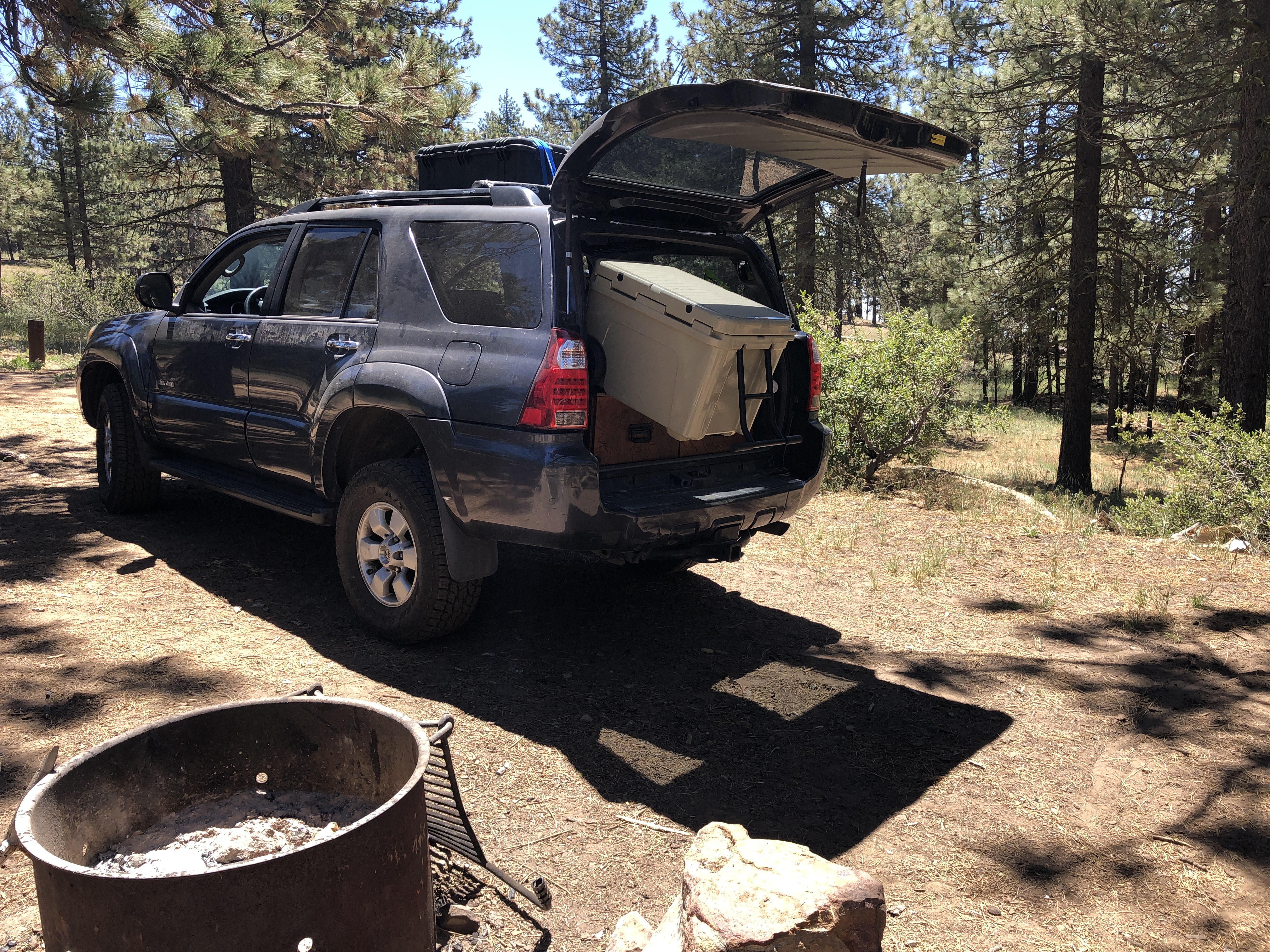
Our YETI above the drawers. Current dimensions below are manufacturer figures, not measurements of this setup.
From our setup
Our Tundra Haul sat at an angle above the drawers so we could open it through the hatch. We bought it used and later replaced it with the SnoMaster setup. The figures here are YETI’s current specifications, not measurements of our older unit. We have no controlled ice-retention test.
Details that affect the fit
28.1 × 18.6 × 19.6 in exterior
37.5 lb empty
Ice storage; no electrical supply needed
Confirm the selected package and accessories with YETI; ice occupies part of the storage space
19.1 × 11.4 × 14.1 in interior
Consider it when: You prefer an ice cooler without an electrical system, with wheels for moving it.
Keep in mind: It weighs 37.5 lb empty, before food and ice. Check hatch access and the space to open its lid.
Before you choose: Measure the cargo opening, drawer height and lid swing; account for food and ice weight.
Evidence checked . Current specifications may differ from older gear.
The fridge and slide in our 4Runner. The exact fridge model is still unknown.
From our setup
It replaced the YETI as our cold storage, mounted on a DFG Offroad slide. We bought both at regular price, used them until we sold the 4Runner, and no longer own either. We have not published a measured performance or runtime claim.
Details that affect the fit
Model and capacity in our archive are unconfirmed
In our experience it held food cold and did not drain the battery, even in 100°F heat on multi-day trips
SnoMaster’s current FAQ describes adjustable low-voltage cut-out and AC/DC changeover; check the manual for the exact model
Consider it when: You want powered cold storage and can plan the battery, charging and slide together.
Keep in mind: Our model is unknown. Get its label before comparing cabinet dimensions, capacity or power draw.
Before you choose: Get the model label before comparing cabinet size or estimating electrical needs.
Evidence checked . Current specifications may differ from older gear.
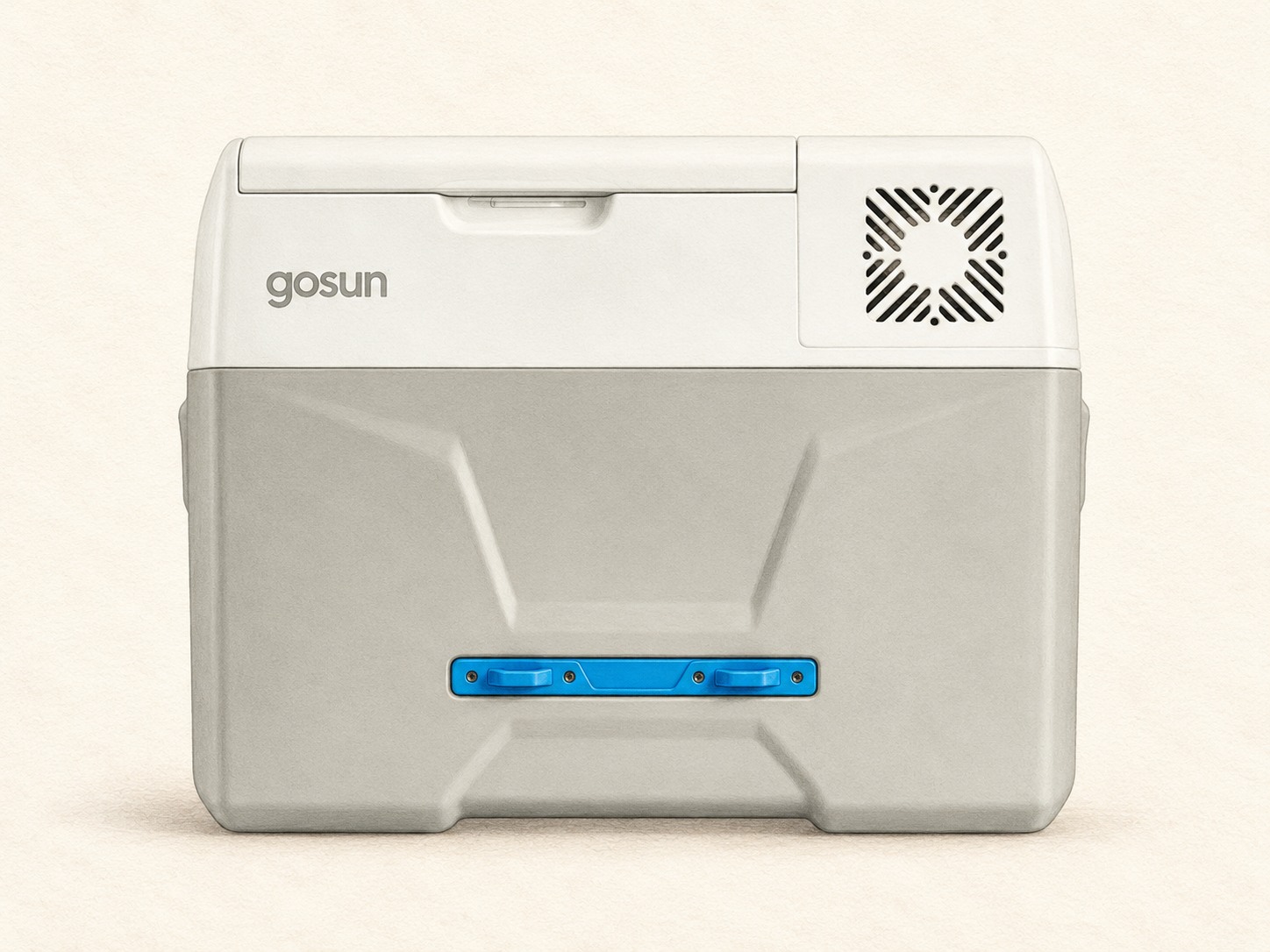
We are comparing fridges for our camper, including the GoSun Chill. We haven't used it. GoSun’s visible October 2 specifications list 40 L, 35.2 lb and 25 × 20 × 16 inches. Its embedded weight field differs, and its FAQ mentions an included Power144 battery that the box list omits. Confirm the selected bundle; we have no runtime test.
Details that affect the fit
25 × 20 × 16 in exterior, per GoSun
35.2 lb listed weight in GoSun’s visible specifications; another embedded maker field says 28 lb
DC compressor runs on 12 or 24V, per GoSun; confirm the compatible supply
Box list: AC adapter, 12V cord, bungee and manual. FAQ calls Power144 included; box list omits it. Confirm the exact bundle before ordering.
40 L listed capacity; temperature setting -4°F to 68°F, per GoSun
Consider it when: You are weighing an electric cooler against ice storage or our SnoMaster setup.
Keep in mind: Allow space and a compatible power supply. Battery inclusion is unclear: the FAQ mentions Power144, but the box list omits it. We have not used the Chill.
Before you choose: Compare usable capacity, power draw on your battery, and whether it fits where your fridge will ride.
Evidence checked . Current specifications may differ from older gear.
We have not used the CRPRO30. Compare this smaller powered fridge with an ice cooler, allowing for the battery and ventilation it needs.
Details that affect the fit
30-quart listed capacity, according to BougeRV
Supports 12/24 V DC and AC power with the appropriate supply
27.55 lb listed weight on the product page
Consider it when: You want a powered fridge and are willing to plan the battery, wiring and space around it.
Keep in mind: Published dimensions and power figures differ across BougeRV pages. We have not chosen one conflicting figure or measured consumption ourselves.
Before you choose: Ask the vendor for the dimensions and power requirements of the exact SKU. Leave room for the lid, ventilation and plug, and budget separately for a suitable power source.
Evidence checked . Current specifications may differ from older gear.
Is an ice cooler simpler than a powered camp fridge?
It avoids a battery and charging system, but ice uses storage space and adds weight. A fridge changes the supporting equipment you need. Our YETI Tundra Haul and later SnoMaster illustrate those two approaches; we did not test them side by side.
What should I measure before buying a Tundra Haul?
Compare YETI’s current 28.1 × 18.6 × 19.6-inch exterior with your cargo opening, drawer height and lid swing. Its listed empty weight is 37.5 lb. Our cooler sat at an angle so the lid could open through the hatch.
What does a fridge cost beyond the fridge itself?
Build a quote for the exact fridge bundle, compatible battery or vehicle supply, charging equipment, cables, and any mount or slide. Separate equipment you already have from new purchases. For an ice cooler, allow for ice, resupply stops and food space occupied by ice. Compare those totals for your actual trip pattern; we have no measured running-cost comparison or universal break-even point.
How do I decide whether my battery is enough?
Use the fridge’s measured daily watt-hours under representative conditions when available, then allow for usable battery capacity, other devices, reserve and recharging. A 12 V input label alone does not give daily consumption. Our camp-power guide includes an illustrative energy budget; it is not a runtime result for the SnoMaster, Chill or CRPRO30.
What should I check in the car before ordering?
Mark the footprint, then check the hatch opening, lid swing, nearby drawers, plug clearance and manufacturer-required ventilation. Include food, ice where applicable, battery and mounting hardware in the loaded weight. Make sure you can reach food without unloading essential equipment. Our YETI’s angled position is one historical example, not a fit guarantee for another vehicle.